Joe’s clarinet-and-guitar duet for Lennie
The Sky Is EverywhereJoe’s clarinet-and-guitar duet for Lennie is both a composed piece of music and a means of communication between two young musicians. Its first part helps Lennie recover a sense of possibility in her own playing; its second arrives amid a rupture in their relationship, and its melody later returns as a sign of renewed connection. Across these appearances, the unfinished, developing duet links musical expression to intimacy without making either the score or the relationship a simple, uninterrupted harmony.
The first part and Lennie’s response
Joe gives Lennie the first part on a sheet of music that is still damp from the rain. At the top, his distinctive handwriting dedicates it to a clarinetist and describes the guitarist who wrote it in self-deprecating terms; the score promises that a second part will follow. The dedication makes the music personal, while its division into parts establishes it as an exchange still in progress rather than a finished gift.
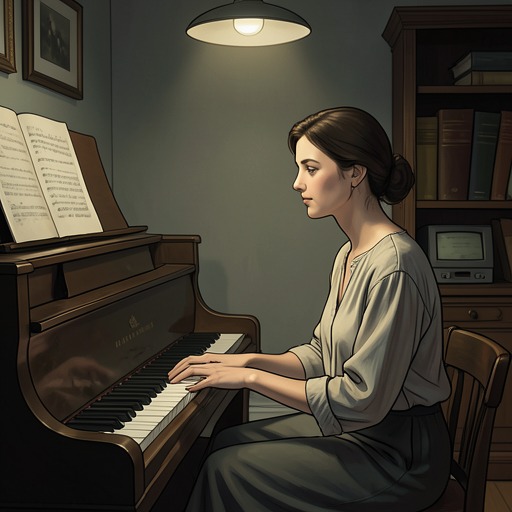
Lennie initially tries to imagine the melody without playing, but finds that she cannot hear it clearly in her head. She retrieves her clarinet, and the written music becomes audible through performance. As she plays, she recalls Joe’s description of her tone as lonely, then experiences his melody as full of a contrasting liveliness. She repeats it until she knows it by heart. The change is not presented as a technical correction to her sound: the duet gives her another way to understand what her instrument can express, and the act of playing turns a page of notation into a felt musical encounter.
Music, grief, and shared performance
The duet belongs to a wider pattern in which music lets Lennie express what ordinary speech has not carried. After Bailey dies, Lennie invites Joe to play and goes upstairs for her clarinet. She then releases accumulated, unspoken grief through an intense clarinet outburst, connecting the sound to memories of her and Bailey growing up together. That episode is not itself the duet, but it clarifies what the instrument can hold for Lennie: feelings and recollections that have been difficult to voice directly.
The possibility of playing together also appears in their earlier musical history. During freshman year, Lennie and Joe are both in honor band when Mr. James urges the students to leave their habitual approach behind and follow him with their instruments. Later, Joe arrives carrying a B-flat clarinet and a bass clarinet, while Lennie reaches for the soprano instrument she is accustomed to playing. These details place the duet within a relationship formed through instruments, invitations to play, and different musical roles, not solely through a written composition.
At a rehearsal for the River Festival, Lennie can follow the selected pieces while feeling as though she is playing with Joe alone, improvising and responding without knowing each note in advance. The duet’s significance therefore extends beyond its pages: it evokes music as a shared activity, one in which attention and response can make performance feel mutual. But that experience is vulnerable. Thoughts of Toby and the previous night interrupt Lennie’s ease, and she spends the rest of rehearsal following the arrangement without deviation. The passage contrasts improvisatory openness with the self-control she adopts under emotional strain.
The second part and separation
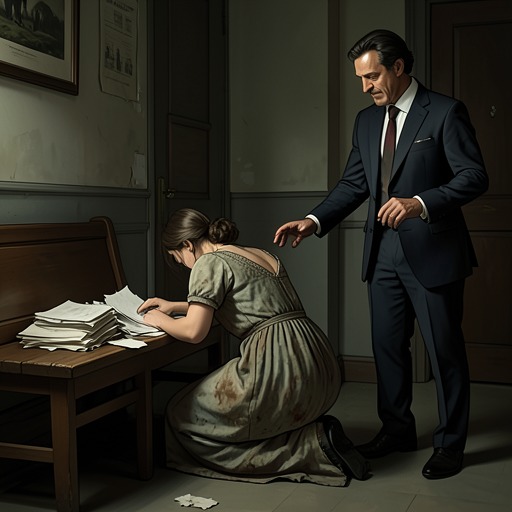
Joe eventually brings Lennie the promised second part, identified on the paper as a duet for the previously named clarinetist and guitarist. He crumples the sheet, throws it to her, and runs away. Lennie smooths the paper, folds it carefully, and puts it in her pocket. The gesture preserves the music even as the delivery turns it into evidence of a painful break: Joe leaves before they can play the new section together.
The place sharpens that contrast. Lennie realizes she is sitting where she and Joe kissed the night before, but she cannot call the melody to mind. The score remains physically with her, carefully folded, while the music that had once filled her imagination is inaccessible. His question about how she could have acted as she did is what she can hear instead. The episode gives the duet a role beyond romantic declaration: its interrupted continuation registers the cost of damaged trust, and the second part’s arrival does not by itself repair what has broken.
The melody’s return
Later, while Lennie is in the woods, a mournful sound draws her attention through the trees. She gradually recognizes it as the melody from Joe’s duet. Footsteps follow, the music stops, and Joe appears carrying a clarinet. In their encounter, he tells her that he has gathered her poems and hands her a box. The melody’s return thus leads into a meeting that also concerns Lennie’s writing, another form of expression she has left scattered and difficult to gather.
The duet’s course remains deliberately different from a neat musical resolution. Its first part is played repeatedly until Lennie memorizes it; its second is delivered in anger and kept, but initially cannot be heard in her mind; then its melody sounds again as Joe comes back into her presence. The evidence establishes the recurrence and the encounter, not a completed performance of both parts or a final outcome for the composition. Its lasting narrative force lies in that unfinishedness: the music can carry tenderness, grief, estrangement, and the possibility of renewed contact without claiming that any one of them has erased the others.